
Have you ever seen a mountain of tiny clothes? Baby clothes are cute, but they can pile up fast. It feels like you’re organizing baby clothes all the time. Where do you even start?
Keeping baby clothes neat can be a challenge. Babies grow so quickly. Their clothes become too small before you know it. Let’s find some easy ways to keep things tidy.

Key Takeaways
- Organizing baby clothes saves space and reduces stress for parents.
- Sort clothes by size to easily find what your baby can wear.
- Use bins or drawers to keep clothes neat and out of the way.
- Label everything, so you know where to find items quickly.
- Donate or store clothes your baby has outgrown to free up space.

Easy Steps for Organizing Baby Clothes
Organizing baby clothes can seem hard. But with a few easy steps, it can become simple. First, gather all the baby’s clothes. This includes everything from tiny socks to little hats. Next, sort the clothes by size. You can use labels like “Newborn,” “0-3 Months,” and so on. Put each size group in its own pile. Now, check each item for stains or damage. Clothes that are too worn can be set aside for rags. Keep only the clothes in good condition. Fold or hang each item neatly. Use drawers, shelves, or bins to store the clothes. Label each bin or drawer with the size of the clothes inside. This will make it easy to find what you need. Remember to keep the most often used items within easy reach. This makes dressing your baby much faster. Regular organization keeps everything in order.
- Gather all baby clothes in one place.
- Sort clothes by size categories.
- Check for stains or damages.
- Fold or hang clothes neatly.
- Label storage bins clearly.
Once you have the clothes sorted, think about how you will store them. Some people like to fold clothes and put them in drawers. Others like to hang clothes in a closet. If you have a small space, use storage bins that can slide under the bed. You can also use hanging organizers that attach to the closet rod. These organizers have pockets for storing small items like socks and hats. No matter what storage method you choose, make sure it is easy for you to access. You want to be able to grab clothes quickly when you need them. Organizing regularly, even for a few minutes each week, helps maintain order. This stops the chaos from returning.
How to Sort Clothes by Size?
Sorting clothes by size is very important. Babies grow fast! The clothes they wear today might not fit next week. To sort, look at the labels on the clothes. Most labels show the size in months or weight. Common sizes are “Newborn,” “0-3 Months,” “3-6 Months,” and so on. If the label is missing, compare the clothes to others you know fit. Make separate piles for each size range. It helps to have clear labels for each pile. You can use sticky notes or pieces of paper. Place each pile in its own bin or drawer after sorting. Keep bigger sizes stored away until needed. This keeps your current storage areas from getting too full. Sorting by size makes dressing your baby easier. It saves time and prevents frustration.
What to Do with Stained Clothes?
Stains happen. Babies are messy! But stained clothes don’t have to go to waste. First, try to treat the stain as soon as possible. Use a stain remover made for baby clothes. Follow the instructions on the label. Sometimes, a little soap and water can work wonders. If the stain is set in, try soaking the clothes overnight. You can use a mixture of water and baking soda. After soaking, wash the clothes as usual. If the stain is still there, don’t give up! You can try using the clothes for other things. Cut them into rags for cleaning. Or, use them for craft projects. Even stained clothes can have a new life.
Best Way to Fold Baby Clothes?
Folding baby clothes neatly saves space. It also makes them easier to find. There are many ways to fold clothes. One popular method is the KonMari method. This involves folding clothes into small rectangles. Then, you stand them up in a drawer. This way, you can see all the clothes at once. Another simple method is to fold clothes in half or thirds. Then, stack them in a pile. This works well for shelves. For onesies, fold the sleeves in and then fold the bottom up. For pants, fold them in half. Experiment with different methods to find what works best for you. The goal is to make the clothes neat and easy to see. This keeps your storage areas tidy and organized.
Fun Fact or Stat: Did you know babies grow about 1 inch per month in their first year? That’s why organizing clothes by size is so important!

The Best Storage Solutions for Baby Clothes
Choosing the right storage solutions is key to organizing baby clothes well. Drawers are great for storing folded items. You can use drawer dividers to keep clothes separated by type. Shelves are another good option. Use bins or baskets on shelves to hold smaller items. Clear plastic bins are helpful because you can see what’s inside. Closets can be used to hang clothes. Use baby-sized hangers to prevent clothes from stretching. Over-the-door organizers are great for small spaces. They have pockets for storing diapers, wipes, and other essentials. Rolling carts are also useful. You can move them from room to room as needed. No matter what you choose, make sure the storage solution is safe and easy to use. Keep everything accessible. This makes organizing easier.
- Use drawers with dividers for folded clothes.
- Shelves with bins are great for small items.
- Baby-sized hangers prevent stretching.
- Over-the-door organizers save space.
- Rolling carts are easy to move around.
Consider the space you have when choosing storage solutions. If you have a small nursery, look for space-saving options. Think about using vertical space. Stackable bins and shelves can help you make the most of your space. If you have a larger nursery, you might have room for a dresser and a closet. In this case, you can use a combination of storage solutions. The best solution is one that fits your needs and your space. Be creative and think outside the box. You can find many affordable and stylish options.
How to Use Drawer Dividers?
Drawer dividers are very useful. They help keep drawers neat and organized. You can use them to separate different types of clothes. For example, you can have one section for socks, one for onesies, and one for pants. This makes it easy to find what you need. Drawer dividers come in many sizes and materials. You can find them made of plastic, fabric, or wood. Some are adjustable, so you can customize the size of each section. To use drawer dividers, simply place them in the drawer. Arrange them to create the sections you want. Then, place the clothes in the appropriate sections. Drawer dividers prevent clothes from getting mixed up. They also make it easier to see everything you have.
Why Use Clear Plastic Bins?
Clear plastic bins are great for storage. They allow you to see what is inside without opening them. This saves time when you are looking for something. Clear bins come in many sizes and shapes. You can find them at most stores. They are also easy to clean. To use clear bins, simply place the items inside. Label the bins with the contents. This makes it even easier to find what you need. Clear bins are also stackable. This helps save space. They are a versatile storage solution for any home.
Best Way to Utilize Closet Space?
Closet space can be valuable. There are many ways to make the most of it. Use baby-sized hangers to hang clothes. This prevents clothes from stretching. Install a second closet rod to double your hanging space. Use over-the-door organizers to store small items. Add shelves to the closet to store folded clothes and bins. Consider using a closet system. These systems are designed to maximize space. They often include shelves, drawers, and hanging rods. No matter what you choose, make sure the closet is well-lit. This makes it easier to see everything inside. A well-organized closet can make a big difference.
Fun Fact or Stat: The average baby goes through 6-8 outfits per day! That’s a lot of laundry and organizing!
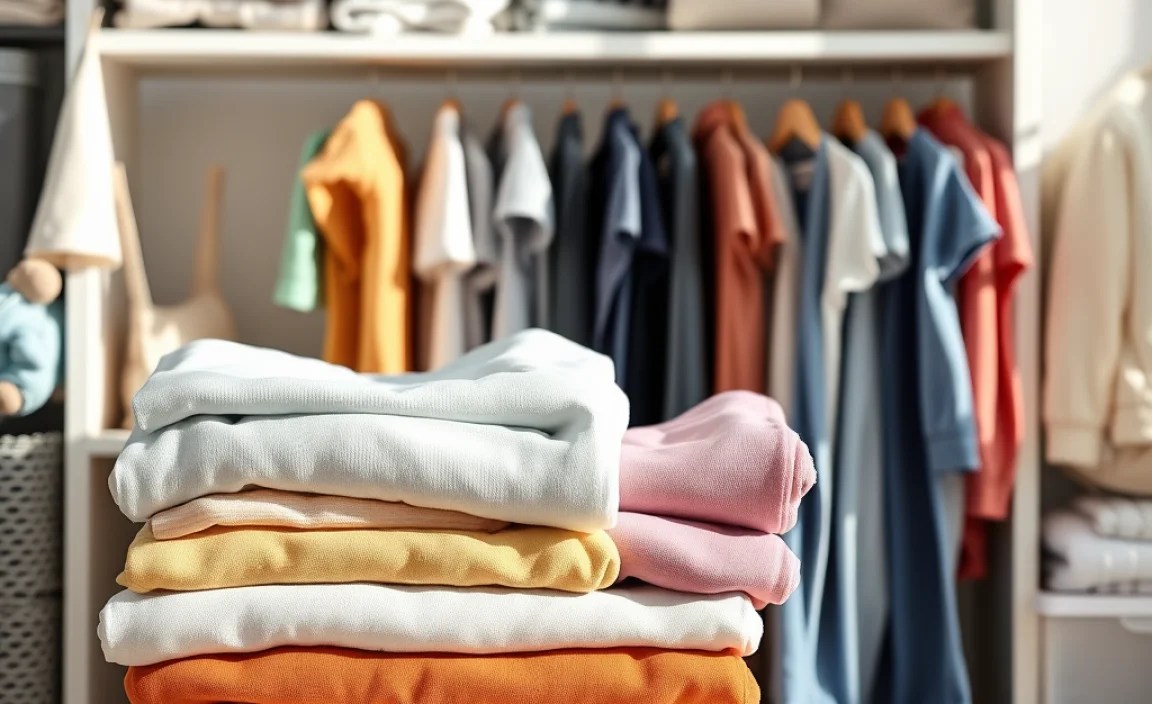
Folding Techniques for Saving Space
Organizing baby clothes also means folding them well. Good folding saves a lot of space. The KonMari method is great for this. You fold clothes into small rectangles. Then, you stand them up in drawers. This way, you can see everything at once. Another method is to roll clothes. This works well for travel. You can also fold clothes in half or thirds. This is simple and works well for shelves. For onesies, fold the sleeves in first. Then, fold the bottom up. For pants, fold them in half. Practice different methods. Find what works best for you. The goal is to make clothes neat and compact. This maximizes your storage space.
- The KonMari method saves drawer space.
- Rolling clothes is great for travel.
- Folding in half or thirds is simple.
- Fold onesies neatly and compactly.
- Fold pants in half to save space.
No matter which folding method you use, consistency is key. Fold all the clothes the same way. This makes them easier to stack and store. It also makes your drawers and shelves look neater. Remember to fold clothes as soon as they are clean and dry. This prevents wrinkles and keeps them looking fresh. Folding can be a relaxing activity. Put on some music and enjoy the process. A well-folded wardrobe makes life easier. It saves time and reduces stress.
What is the KonMari Method?
The KonMari method is a way to organize your belongings. It was created by Marie Kondo. The method involves asking yourself if an item “sparks joy.” If it does, you keep it. If it doesn’t, you thank it and let it go. For clothes, you fold them into small rectangles. Then, you stand them up in drawers. This way, you can see everything at once. The KonMari method is not just about organizing. It is also about being mindful of what you own. It encourages you to keep only the things you love. This can lead to a more peaceful and clutter-free life.
How to Roll Clothes for Travel?
Rolling clothes is a great way to save space when traveling. It also helps prevent wrinkles. To roll clothes, lay them flat. Fold in the sleeves or any extra fabric. Then, start rolling tightly from one end to the other. Once you have a tight roll, secure it with a rubber band if needed. Rolled clothes take up less space than folded clothes. They also fit well in suitcases and bags. Rolling is especially useful for items like t-shirts and jeans. Experiment with rolling different types of clothes. You will find that it is a versatile technique.
Tips for Folding Onesies and Pants?
Folding onesies and pants can be easy. For onesies, lay them flat. Fold the sleeves in towards the center. Then, fold the bottom up towards the top. This creates a neat rectangle. For pants, lay them flat. Fold them in half lengthwise. Then, fold them in half again. This creates a smaller rectangle. Stack the folded onesies and pants in drawers or on shelves. Keep similar items together. This makes it easy to find what you need. Neat folding keeps your baby’s clothes organized.
Fun Fact or Stat: Folding clothes can burn up to 70 calories per hour! Organizing can be a workout!

Seasonal Rotation for Baby Clothes
Babies need different clothes for different seasons. Organizing baby clothes should include seasonal rotation. Store out-of-season clothes away. This frees up space for current items. Label storage bins clearly. Use labels like “Summer Clothes” or “Winter Clothes.” Store bins in a closet, attic, or basement. When the season changes, switch the clothes. Bring out the appropriate clothes. Put away the out-of-season items. This keeps your baby’s wardrobe manageable. It also makes it easier to find what you need. Seasonal rotation saves space and time.
- Store out-of-season clothes away.
- Label storage bins clearly.
- Use bins in closets or attics.
- Switch clothes each season.
- Keep wardrobes manageable.
Before storing clothes, wash them. Make sure they are clean and dry. This prevents mold and mildew. Use airtight containers to protect the clothes. This keeps out dust and pests. Consider using vacuum-sealed bags. These bags compress the clothes. This saves even more space. Remember to label the bags clearly. Include the size and type of clothes inside. Seasonal rotation is an important part of organizing. It keeps your baby’s clothes neat and accessible.
When to Rotate Clothes?
Rotating clothes should happen each season. This means four times a year. Spring, summer, fall, and winter. As the weather changes, so should your baby’s wardrobe. In the spring, put away heavy winter clothes. Bring out lighter clothes for warmer weather. In the summer, pack away long sleeves and pants. Focus on shorts and t-shirts. In the fall, bring out sweaters and jackets. Prepare for cooler temperatures. In the winter, focus on warm layers. Include hats, gloves, and scarves. Rotating clothes ensures your baby is always comfortable.
How to Store Out-of-Season Clothes?
Storing out-of-season clothes requires care. Wash all items before storing them. This prevents stains from setting. Use airtight containers to protect the clothes. Plastic bins or vacuum-sealed bags work well. Label each container clearly. Include the size and season of the clothes. Store containers in a cool, dry place. Attics, basements, and closets are good options. Avoid storing clothes in damp or humid areas. This can cause mold and mildew. Proper storage keeps clothes in good condition.
What to Do with Clothes That Don’t Fit?
Babies outgrow clothes quickly. Have a system for dealing with clothes that don’t fit. One option is to donate them. Local charities and shelters often need baby clothes. Another option is to sell them. You can sell clothes at consignment shops or online. You can also store them for future children. If you plan to have more kids, store the clothes carefully. Label the containers with the size and type of clothes. This makes it easy to find them later. Dealing with outgrown clothes keeps your home organized.
Fun Fact or Stat: Some families have so many baby clothes, they start organizing them by color!
Labeling Systems for Quick Access
Good labeling is essential for organizing baby clothes. Labels help you find what you need quickly. Use clear and easy-to-read labels. You can use a label maker or write labels by hand. Label drawers, shelves, and bins. Include the size and type of clothes. For example, “0-3 Months Onesies” or “6-9 Months Pants.” Color-coding can also be helpful. Use different colored labels for different sizes. This makes it even easier to find the right clothes. A good labeling system saves time and frustration. It keeps your baby’s wardrobe organized.
- Use clear and easy-to-read labels.
- Label drawers, shelves, and bins.
- Include size and type of clothes.
- Color-coding can be helpful.
- A good system saves time.
Consider using a consistent labeling system. Choose a font and style for your labels. This makes everything look neat and organized. Place labels in a visible location. Make sure they are easy to see. Update labels as needed. As you add or remove clothes, change the labels accordingly. A well-maintained labeling system is an investment. It pays off in time and convenience. It also makes organizing much easier.
Why is Labeling Important?
Labeling is important for many reasons. It helps you find things quickly. It prevents confusion. It keeps things organized. Without labels, you might have to search through every bin. This can waste a lot of time. Labels tell you what is inside at a glance. This saves time and effort. Labeling also helps others find things. If someone else is helping with the baby, they can easily find what they need. A good labeling system makes life easier for everyone.
What to Include on Labels?
Labels should include key information. Start with the size of the clothes. This is the most important thing. Next, include the type of clothes. For example, onesies, pants, or socks. You can also include the season. For example, summer or winter. If you have a lot of clothes, you can add more details. For example, “long-sleeved onesies” or “short-sleeved onesies.” The more information you include, the easier it will be to find what you need.
Best Tools for Creating Labels?
There are many tools for creating labels. A label maker is a great option. Label makers print professional-looking labels quickly. You can also use a computer and printer. Create labels in a word processing program. Print them on sticker paper. If you don’t have a label maker or printer, you can write labels by hand. Use a permanent marker for clear and lasting labels. No matter what tool you use, make sure the labels are easy to read.
Fun Fact or Stat: Some people use pictures on labels for kids who can’t read yet. This makes organizing a family affair!
Donating or Storing Outgrown Clothes
Babies outgrow clothes fast. Organizing baby clothes includes deciding what to do with outgrown items. You can donate clothes to charity. Many organizations accept baby clothes. You can also sell them at consignment shops. Some stores buy used baby clothes. Storing clothes for future children is another option. Make sure to clean and store them properly. Use airtight containers to prevent damage. Properly handling outgrown clothes keeps your home tidy. It also helps others in need.
- Donate clothes to charity.
- Sell clothes at consignment shops.
- Store clothes for future use.
- Clean clothes before storing.
- Use airtight containers.
Before donating, check the clothes. Make sure they are clean and in good condition. Remove any stains or tears. Fold the clothes neatly. Place them in a bag or box. Contact local charities to see what they need. Some charities have specific requirements. Before selling, research consignment shops. Find one that specializes in baby clothes. They will evaluate your clothes and offer a price. Storing clothes requires careful planning. Choose a cool, dry place. This prevents mold and mildew. Label the containers clearly.
Where to Donate Baby Clothes?
There are many places to donate baby clothes. Local charities are a great option. These charities often help families in need. Homeless shelters also accept baby clothes. They provide clothing to homeless families. Churches and community centers may also accept donations. Contact these organizations to see what they need. Make sure the clothes are clean and in good condition. Your donation can make a big difference.
How to Sell Used Baby Clothes?
Selling used baby clothes can earn you money. Consignment shops are a popular option. These shops sell your clothes for you. They take a percentage of the sale price. Online marketplaces are another option. You can list your clothes for sale online. Take clear photos of the clothes. Write detailed descriptions. Price the clothes fairly. Be prepared to ship the clothes to buyers. Selling used baby clothes can be a great way to declutter.
Best Way to Store Clothes for Future Use?
Storing clothes for future use requires care. Wash all clothes before storing. This prevents stains from setting. Use airtight containers to protect the clothes. Plastic bins or vacuum-sealed bags work well. Label each container clearly. Include the size and type of clothes. Store containers in a cool, dry place. Avoid storing clothes in damp or humid areas. This can cause mold and mildew. Proper storage keeps clothes in good condition.
| Storage Method | Pros | Cons | Best For |
|---|---|---|---|
| Plastic Bins | Durable, stackable, protects from dust | Can be bulky, not breathable | Attics, basements, long-term storage |
| Vacuum-Sealed Bags | Saves space, airtight | Can wrinkle clothes, requires vacuum | Long-term storage, bulky items |
| Fabric Bins | Breathable, foldable, stylish | Less protection from dust, less durable | Closets, shelves, short-term storage |
| Original Packaging | Convenient, easy to identify | Takes more space, may not be durable | Short-term storage, small items |
Fun Fact or Stat: Some people create memory boxes with special baby clothes. This turns organizing into a sentimental activity!
Summary
Organizing baby clothes can seem overwhelming. But with a few simple steps, it can become manageable. Sort clothes by size and season. Use storage solutions that fit your space. Label everything clearly. Donate or store outgrown clothes. Folding techniques can save space. Regular rotation keeps your baby’s wardrobe organized. A well-organized baby wardrobe saves time and reduces stress. It also makes it easier to enjoy this special time with your baby.
Remember to choose storage methods that work for you. Clear bins, drawer dividers, and closet organizers can all help. The key is to find a system that is easy to maintain. A little effort each week can keep everything in order. This makes dressing your baby a breeze.
Conclusion
Organizing baby clothes might seem like a small thing. But it can make a big difference in your daily life. A tidy and organized nursery creates a calm environment. This reduces stress. It also makes it easier to find what you need. Use these tips to create a system that works for you. Enjoy the process of preparing for your little one. Soon, you’ll be a pro at keeping those tiny clothes in order!
Frequently Asked Questions
Question No 1: How often should I organize baby clothes?
Answer: You should organize baby clothes regularly. Babies grow quickly! Aim to sort through clothes every 1-2 months. This helps you remove clothes that are too small. It also helps you prepare for the next size. Regular organizing prevents clothes from piling up. It keeps your baby’s wardrobe manageable. This makes dressing your baby easier. This also helps you see what you have and what you need. Don’t wait until the closet is overflowing! A little effort regularly keeps things in order.
Question No 2: What is the best way to store baby clothes long-term?
Answer: Storing baby clothes long-term requires care. First, wash all the clothes. Make sure they are completely dry. This prevents mold and mildew. Use airtight containers to store the clothes. Plastic bins or vacuum-sealed bags work well. Label each container clearly. Include the size and type of clothes. Store the containers in a cool, dry place. Avoid storing clothes in damp or humid areas. This can damage the clothes. Check the clothes periodically. Make sure they are still in good condition. With proper storage, you can preserve these precious items.
Question No 3: How can I save space when organizing baby clothes?
Answer: Saving space is key when organizing baby clothes. Use space-saving storage solutions. Drawer dividers, clear bins, and over-the-door organizers can help. Fold clothes using the KonMari method. This makes them compact and easy to see. Roll clothes for travel or storage. This saves even more space. Utilize vertical space with shelves and stackable bins. Store out-of-season clothes away. This frees up space for current items. Regular decluttering also helps. Remove clothes that are too small or damaged. These tips maximize your storage space.
Question No 4: What should I do with stained baby clothes?
Answer: Stains are common on baby clothes. Try to treat stains as soon as possible. Use a stain remover made for baby clothes. Follow the instructions on the label. For stubborn stains, soak the clothes overnight. Use a mixture of water and baking soda. If the stain remains, consider repurposing the clothes. Cut them into rags for cleaning. Use them for craft projects. Or, donate them to organizations that accept stained clothes. Even stained clothes can be useful.
Question No 5: How do I choose the right size clothes for my baby?
Answer: Choosing the right size clothes can be tricky. Babies grow at different rates. Pay attention to the size labels on the clothes. Common sizes include Newborn, 0-3 Months, and 3-6 Months. Consider your baby’s weight and length. If your baby is between sizes, choose the larger size. It’s better for clothes to be a little too big than too small. Check the fit of the clothes regularly. Make sure they are comfortable and not too tight. You’ll quickly learn what sizes work best for your baby. This makes organizing baby clothes much easier.
Question No 6: How can I involve my child in organizing their clothes?
Answer: Involving your child in organizing can be fun. Make it a game! Ask them to help sort clothes by color or type. Let them choose where to put their clothes. Use colorful bins and labels. This makes organizing more appealing. Praise their efforts and make it a positive experience. Even young children can help put away socks or fold simple items. This teaches them responsibility. It also helps them develop good habits. Make organizing baby clothes a family activity.
